Survey
A plain-language security check for small-business websites: HTTPS, email spoofing protection, browser protections and outdated website software, each finding explained with its fix.
Small-business owners · 2026 · Go, Cloud Run, Terraform
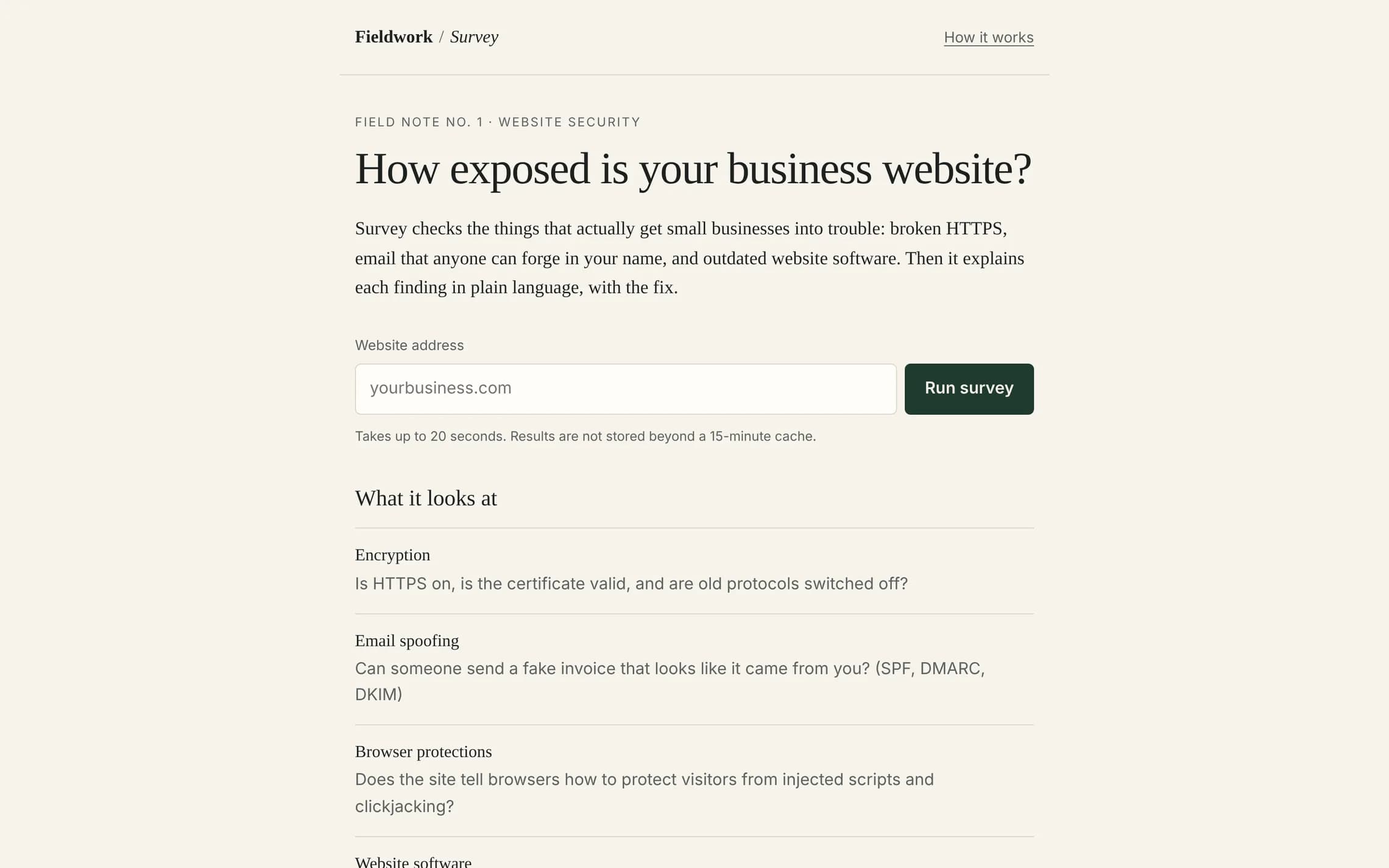
A plain-language security check for small-business websites: HTTPS, email spoofing protection, browser protections and outdated website software, each finding explained with its fix.
Small-business owners · 2026 · Go, Cloud Run, Terraform
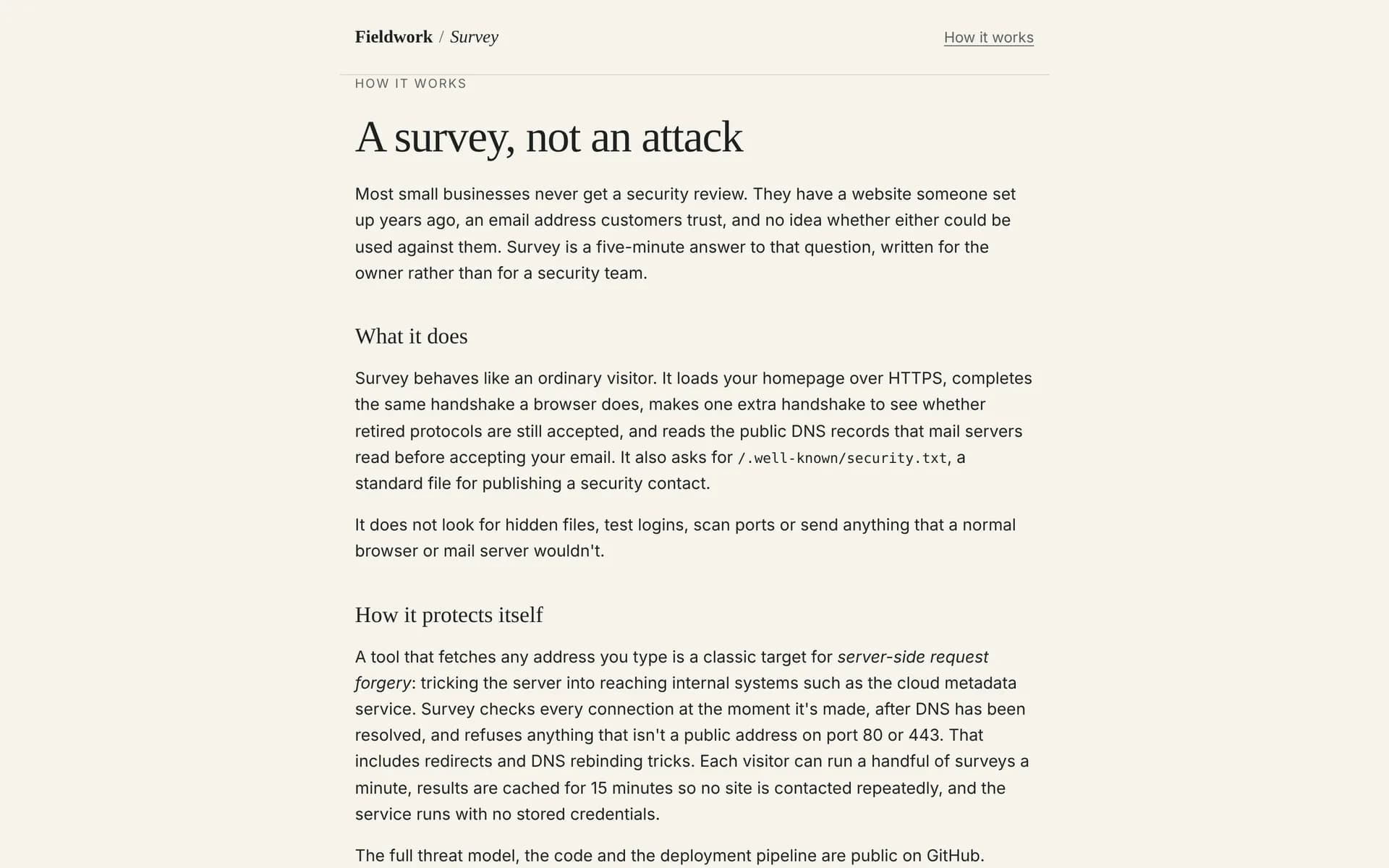
Survey starts from a premise its “How it works” page states: most small businesses never get a security review. They have a website someone set up years ago, an email address customers trust, and no idea whether either could be used against them. Survey is meant as “a five-minute answer to that question, written for the owner rather than for a security team”.
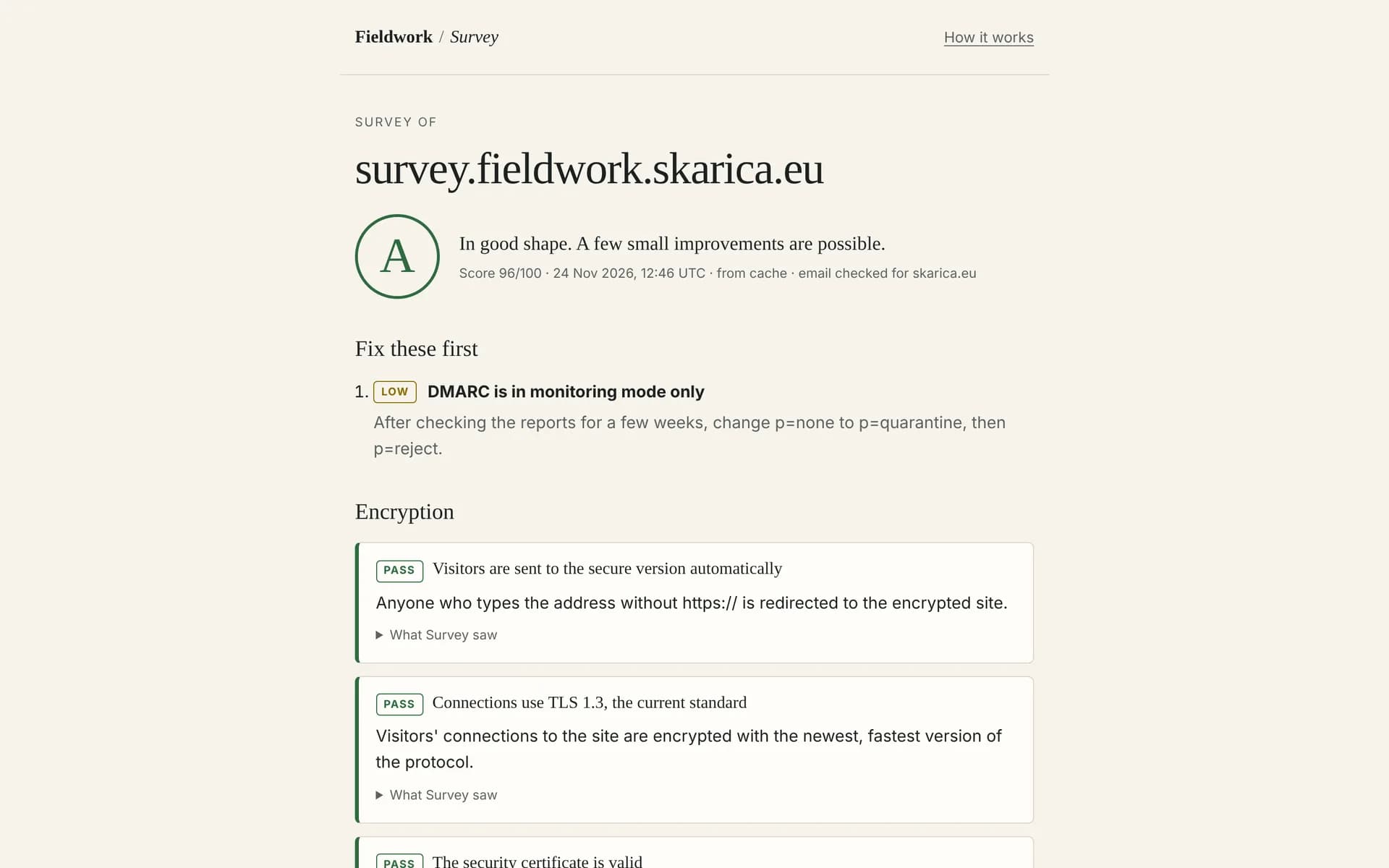
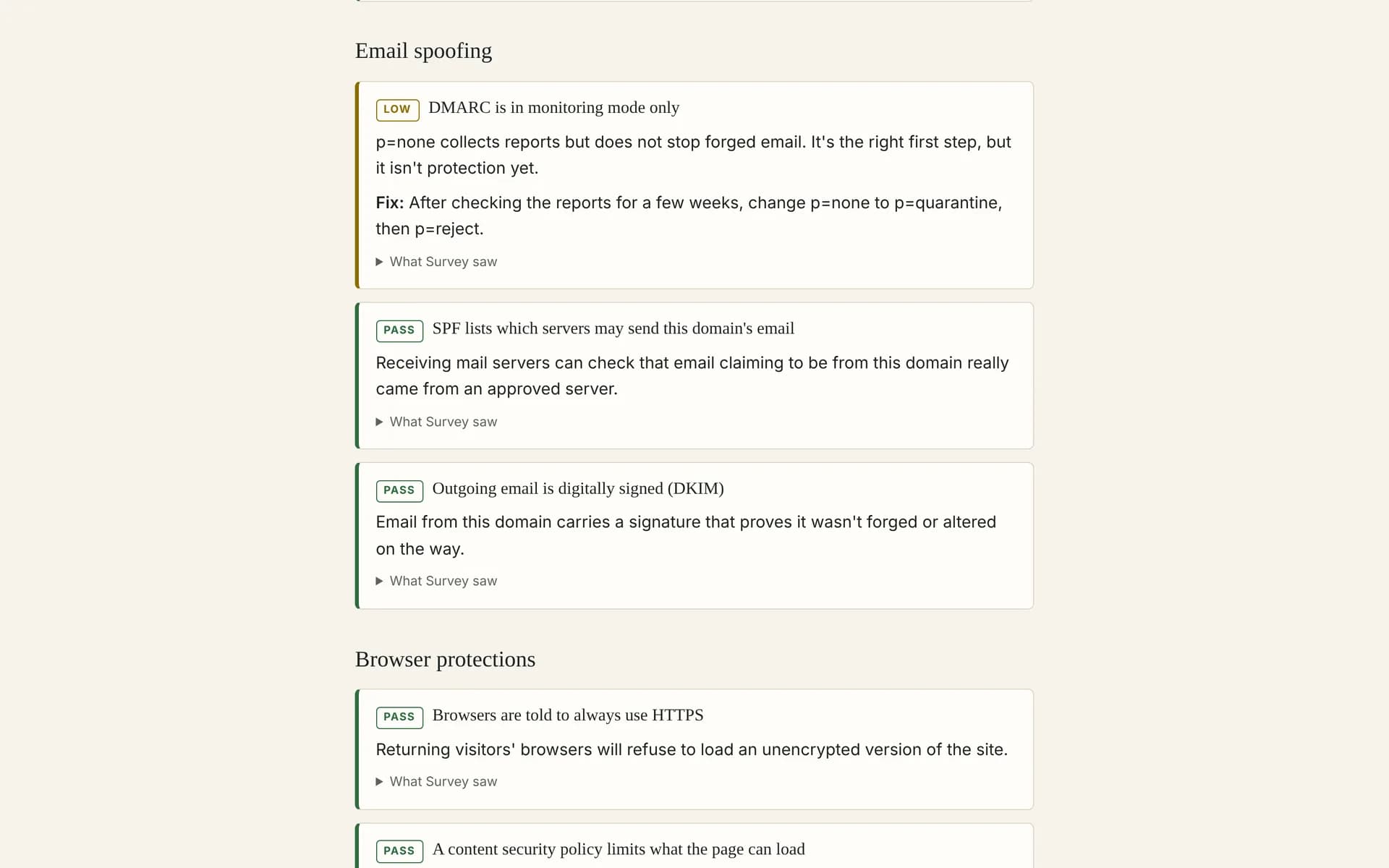
Survey answers one question: how exposed is my website? It behaves like an ordinary visitor. It loads the homepage over HTTPS, completes the handshake a browser would, checks once more whether retired protocols are still accepted, and reads the public DNS records a mail server reads before accepting email. It does not look for hidden files, test logins or scan ports. Each finding comes in plain language with a concrete fix. Every site starts at 100 points; a high-severity finding costs 25, a medium one 10 and a low one 4.
A tool that fetches any address it is given is a classic target for server-side request forgery, so every outbound connection is checked at the socket, after DNS has resolved: anything that is not a public address on port 80 or 443 is refused, redirects included. Each visitor can run a handful of surveys a minute, and results are cached for 15 minutes, so no site is contacted over and over. The service holds no secrets, and its runtime identity has no IAM roles. Reports stay in memory for those 15 minutes; the logs keep the domain and a one-way hash of the visitor’s address, used only for rate limiting. The threat model, the code and the pipeline are public.
Survey is the first program of Fieldwork: “security tools built the way an anthropologist does fieldwork: by looking at what is actually there, not at what people say is there.” The programs are meant to be small, deployed and usable, and to share one hardened Google Cloud platform: keyless CI/CD, least-privilege identities, signed images and security gates on every change.
Margin →